close
Choose Your Site
Global
Social Media

Views: 0 Author: Site Editor Publish Time: 2025-10-13 Origin: Site
Imagine crafting intricate designs with pinpoint accuracy—this is the power of CNC Drilling Machines. These machines revolutionize manufacturing by automating precise hole-making processes, crucial for various industries. In this post, you'll learn what CNC drilling is, its significance in manufacturing, and best practices for designing with CNC drilling in mind.
CNC drilling machines consist of several critical parts that work together to produce precise holes. The rotating cutting tool, or drill bit, is the heart of the machine, responsible for removing material. The turret holds multiple tools, allowing quick changes and complex drilling operations without manual intervention. The workpiece holder secures the material firmly, preventing movement during drilling. Lastly, the CNC control system guides the machine's movements based on programmed instructions, ensuring accuracy and repeatability.
CNC drilling machines come in various types, each suited for specific tasks:
Vertical Drilling Machines: These machines have drill bits mounted vertically, moving up and down to create holes. They are ideal for straightforward drilling tasks and smaller workpieces.
Horizontal Drilling Machines: Designed for larger workpieces, these machines have spindles parallel to the worktable, allowing drilling along different axes. This setup enhances precision and efficiency for complex projects.
Multi-Spindle Drilling Machines: Equipped with multiple spindles, they can drill several holes simultaneously. This feature is perfect for high-volume production where speed is essential.
Gantry Type Drilling Machines: These versatile machines handle large, irregularly shaped workpieces. Their tooling system can move flexibly, adapting to various project requirements.
When choosing CNC drilling equipment, consider the following modern features to maximize productivity and quality:
Spindle Speed: Machines offering a broad range of spindle speeds, from 1,000 to 15,000 RPM or more, can handle different materials and drilling needs efficiently.
Feed Rate Control: Adjustable feed rates help optimize drilling based on material hardness, tool size, and hole depth, improving tool life and hole quality.
Coolant Systems: Effective coolant systems reduce heat buildup, extend tool life, and improve hole finish, especially when working with metals.
Automatic Tool Changing: This feature minimizes downtime by quickly swapping drill bits, allowing uninterrupted production runs.
User-Friendly Control Panels: Intuitive interfaces simplify programming and operation, reducing errors and training time.
Multi-Axis Capability: Machines with X, Y, and Z axes provide precise positioning, enabling complex drilling patterns.
Compatibility with Various Drill Bit Types: Support for twist drills, center drills, and indexable drills ensures versatility across applications.
Selecting a CNC drilling machine with these features ensures better efficiency, precision, and adaptability to diverse manufacturing challenges.
Tip: Prioritize CNC drilling machines with automatic tool changers and robust coolant systems to boost productivity and maintain high-quality hole finishes in your operations.
When designing parts for CNC drilling, keep the drill bit’s path smooth and predictable. Ensure the drill entry surface is perpendicular to the drill bit. This helps the bit start cleanly and stay on course, improving hole accuracy. Avoid angled or uneven surfaces at the entry point to prevent wandering or misalignment.
Similarly, the exit surface should also be perpendicular to the drill axis. This reduces the risk of drill breakage as the bit exits the material. If the exit is angled, the drill can catch and snap under stress.
Avoid interrupted cuts. If the drill bit passes through an opening on one side, it may deflect. Deflection leads to off-center holes and possible tool damage. Make sure the drill bit remains fully engaged in material throughout the cut for best straightness.
Allow sufficient chip clearance, especially for holes with internal threads. Through holes are preferable to blind holes for easier chip evacuation. When chips clog the hole, heat and wear increase, reducing tool life and hole quality.
Shorten thread lengths when possible. The first few thread pitches carry most of the load, so extra length often adds unnecessary machining time and material.
For threaded parts, add chamfers on external thread ends and countersinks on internal thread ends. These features reduce burrs and help threading tools work smoothly.
Design blind holes with a standard drill point shape at the bottom. Usually, a 118° or 140° drill point works best, especially for materials like stainless steel. Flat-bottom holes require special tooling and may increase costs.
Avoid deep holes exceeding eight times the drill diameter. Deep holes cause chip clearance issues and increase the risk of drill wandering. While specialty drills can go deeper, they are costly and less common.
Avoid very small holes unless necessary. Drills smaller than about 3 mm diameter break easily and slow production.
Use rectangular coordinates to locate holes on milled parts. These coordinates simplify programming and reduce errors compared to angular coordinates. For turned parts, use the part center as the reference point.
Design parts so all holes can be drilled from as few sides as possible, ideally one side. This reduces tooling complexity and handling time.
Standardize hole sizes, fasteners, and threads across your design. Fewer drill sizes mean less tool changing and faster production.
Leave enough space around holes for the drill tool and holder. A minimum 12 mm clearance from the hole center to the nearest wall is recommended, along with wall thicknesses greater than eight times the hole diameter.
Avoid intersecting drilled and reamed holes. Overlapping holes can cause tool breakage and make burr removal difficult.
When reaming blind holes, add extra drilled depth for chip room. Follow tool manufacturer specifications for reaming offsets.
Entry and exit surfaces directly influence hole quality and drill life. Ensure entry surfaces are flat and perpendicular to the drill axis. This prevents the drill from slipping or wandering when it first contacts the material.
Exit surfaces should also be perpendicular. Angled exits can cause the drill to grab or break when leaving the hole. If possible, design parts so the drill exits into open space or a sacrificial backing plate to support clean exit holes.
Using spot drilling or center drilling before full drilling improves accuracy. These pilot holes guide the main drill bit, reducing deflection and improving hole location.
Consider adding chamfers or countersinks at the entry and exit points to reduce burrs and ease fastener installation.
Tip: Always design holes with perpendicular entry and exit surfaces and allow sufficient space for chip clearance to ensure clean, accurate drilling and prolong tool life.
The CNC drilling process begins with a detailed design and planning phase. Here, engineers create a CAD model specifying hole locations, sizes, and depths. This design must consider material type, drill entry and exit angles, and chip clearance to ensure smooth drilling.
Next comes programming. The CAD design converts into G-code, a set of instructions the CNC machine follows. This code controls drill coordinates, spindle speed, feed rate, and depth. Proper programming is crucial for precision and tool longevity.
Setup follows programming. The workpiece is securely clamped to prevent movement. The correct drill bits are installed, and machine settings adjusted per the program. Accurate setup reduces errors and tool breakage.
During drilling, the CNC machine executes the programmed instructions. The drill bit rotates and advances into the material, creating holes at exact locations and depths. Automation ensures consistent quality, even for complex hole patterns.
Finally, quality control checks the drilled part. Inspectors measure hole size, straightness, and surface finish, verifying compliance with tolerances. Any defects trigger adjustments or rework to maintain standards.
Programming must factor in material hardness and hole depth to set optimal spindle speeds and feed rates. Too fast or too slow can cause tool wear or poor hole quality.
Use rectangular coordinates for hole positioning on milled parts; it simplifies programming and reduces errors. For turned parts, use the part center as the origin.
During setup, ensure the drill entry surface is perpendicular to the drill axis. This prevents drill wandering and improves hole accuracy. Also, confirm the exit surface is perpendicular to reduce drill breakage.
Secure the workpiece firmly and verify tool clearance around holes. At least 12 mm clearance from hole center to nearest wall prevents collisions. Use automatic tool changers if available to speed production.
Quality control involves inspecting hole dimensions, surface finish, and straightness. Use coordinate measuring machines (CMM) or optical comparators for precise measurement.
Check for burrs or rough edges at entry and exit points. Chamfers or countersinks can minimize these defects.
Monitoring tool wear is vital. Worn drills produce poor hole quality and risk breakage. Regular tool replacement and coolant system maintenance help maintain consistent quality.
Document inspection results to track process stability and identify trends. This data supports continuous improvement and prevents defects in future batches.
Tip: Always program CNC drilling with material-specific spindle speeds and feed rates, and verify perpendicular entry and exit surfaces during setup for precise, high-quality holes.
Choosing the right CNC drilling machine depends on your specific production needs. First, consider the size and type of parts you work on. Larger workpieces require machines with bigger tables and more robust frames. If your production involves many holes drilled simultaneously, multi-spindle machines may boost efficiency.
Material type also matters. Some machines handle metals better, while others are optimized for plastics or composites. Look for machines compatible with the materials you commonly use. Precision requirements should guide your choice too. High-precision industries like aerospace demand machines with tight tolerance capabilities.
Another factor is automation level. Machines with automatic tool changers reduce downtime and increase throughput. User-friendly control panels and software ease programming and reduce operator errors. Maintenance and service availability are important as well, ensuring your machine stays operational with minimal disruption.
Spindle speed and feed rate are critical for drilling efficiency and hole quality. Spindle speed refers to how fast the drill bit rotates, usually measured in revolutions per minute (RPM). Higher speeds suit softer materials like aluminum, while slower speeds work better for hard metals to avoid overheating.
Feed rate controls how fast the drill bit advances into the material. Too fast a feed rate can cause tool wear or breakage; too slow can overheat the tool and reduce productivity. The ideal combination depends on material hardness, drill diameter, and hole depth.
Look for machines offering adjustable spindle speeds and feed rates. This flexibility lets you optimize drilling parameters for each job, improving tool life and hole finish. Some modern machines include automatic feed rate adjustments based on sensor feedback, enhancing precision and reducing errors.
Coolant systems play a vital role in CNC drilling. They reduce heat generated during drilling, which extends tool life and improves hole surface finish. Effective coolant flow also helps clear chips from the hole, preventing clogging and drill bit damage.
Choose machines with advanced coolant delivery options, such as through-spindle coolant or high-pressure systems. These systems ensure coolant reaches the cutting edge directly, especially important for deep holes or hard materials.
Automatic tool changers are another valuable feature. They enable quick switching between different drill bits without manual intervention. This reduces machine downtime and allows complex drilling sequences with multiple hole sizes or types. For high-volume production, automatic tool changers significantly boost efficiency.
When combined, efficient coolant systems and automatic tool changers help maintain consistent quality and speed, reducing production costs and improving overall workflow.
Tip: Prioritize CNC drilling machines offering adjustable spindle speeds, effective coolant systems, and automatic tool changers to maximize drilling precision, tool life, and production efficiency.
CNC drilling plays a vital role in automotive and aerospace manufacturing. These industries demand precise, consistent holes for fasteners, fuel lines, and structural components. In automotive assembly, CNC drilling machines create holes for engine blocks, chassis, and transmission parts. The accuracy ensures proper fit and performance.
Aerospace applications require extremely tight tolerances due to safety and performance standards. CNC drilling machines produce holes in airframes, turbine blades, and landing gear components. The ability to drill multiple holes quickly and accurately reduces production time and cost. Materials like aluminum, titanium, and composites are commonly drilled to meet weight and strength requirements.
In electronics, CNC drilling machines create precise holes on printed circuit boards (PCBs) for component leads and vias. These holes must have exact diameters and positioning to ensure electrical connectivity. The small size and high volume of holes require machines with high spindle speeds and fine feed control.
CNC drilling also helps manufacture enclosures and heat sinks by drilling mounting holes and ventilation slots. The process supports rapid prototyping and mass production, enabling faster product development cycles.
Prototyping benefits greatly from CNC drilling’s flexibility and speed. Engineers can test designs by drilling holes in prototype parts made from various materials. This helps verify fit, function, and manufacturability before full-scale production.
Custom machining shops use CNC drilling machines to create specialized components for industries like medical devices, robotics, and industrial equipment. The machines’ programmability allows quick setup changes, accommodating small batch sizes and unique designs.
Tip: When selecting CNC drilling for your project, consider industry-specific requirements like material type, hole precision, and production volume to choose the best machine and optimize your process.
CNC drilling offers precise, repeatable hole-making that traditional methods can't match. It ensures consistent hole size, location, and depth, critical for quality manufacturing. This precision reduces errors and scrap, saving time and money. CNC drilling is also fast, making it ideal for high-volume production runs. Its automation cuts down manual labor, improving efficiency and lowering costs.
The ability to drill various hole types—such as straight, countersunk, or threaded—adds versatility. CNC machines handle different materials, including metals, plastics, and composites, broadening their application. Moreover, CNC drilling reduces human error and operator fatigue, ensuring consistent results even in complex projects.
Despite its advantages, CNC drilling has limitations. It primarily focuses on hole creation, lacking the versatility of milling or turning for shaping parts. Drilling hard materials like hardened steel or titanium can be challenging, requiring specialized tools and slower speeds. Excessive heat buildup during drilling can cause tool wear or damage the workpiece if coolant systems are inadequate.
Small-diameter holes (below 3 mm) increase the risk of drill breakage and slow production speed. Deep holes, especially those exceeding eight times the drill diameter, pose chip clearance problems and may reduce hole straightness. CNC drilling also demands upfront investment in machines and tooling, which might be costly for small operations.
Compared to CNC milling, drilling is less versatile but faster for hole-making tasks. Milling can create complex shapes and fine surface finishes, while drilling specializes in cylindrical holes. Milling suits intricate parts with tight tolerances; drilling excels in repetitive, precise hole production.
Turning offers excellent cylindrical part shaping but is limited to rotationally symmetric components. CNC drilling complements these processes by efficiently producing holes needed for assembly or fastening.
In some cases, combining CNC drilling with milling or turning provides the best results, balancing speed, accuracy, and complexity. Selecting the right process depends on part design, material, and production volume.
Tip: Leverage CNC drilling for high-volume, precise hole-making but plan for material hardness, hole size, and depth to avoid tool wear and ensure optimal performance.
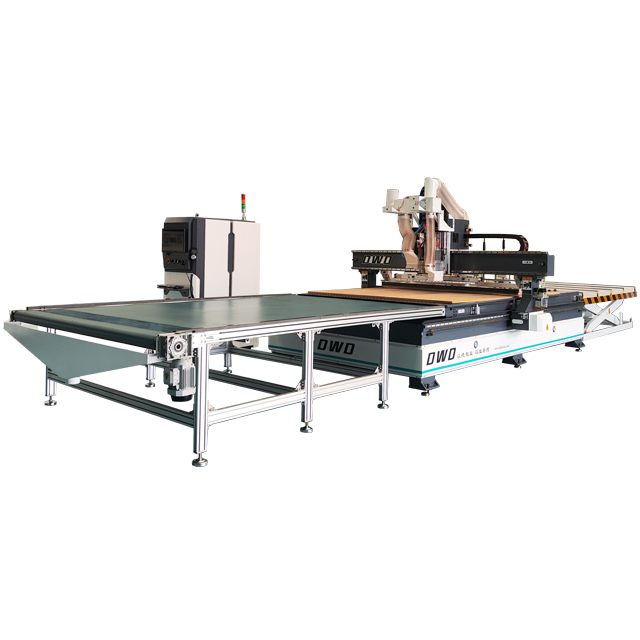
Designing for CNC drilling involves ensuring smooth drill paths, perpendicular entry and exit surfaces, and sufficient chip clearance. Future trends in CNC drilling technology focus on automation and advanced materials handling. Optimizing CNC drilling designs can enhance efficiency and precision in manufacturing. DWD MECHATRONICS offers innovative CNC drilling solutions, providing significant value through precision engineering and advanced features. Their products enhance productivity and quality in various industries, ensuring reliable performance and adaptability to evolving manufacturing challenges.
A: A CNC Drilling Machine is an automated tool used for creating precise holes in various materials, guided by programmed instructions for accuracy and repeatability.
A: CNC Drilling Machines use a rotating drill bit controlled by a CNC system to drill holes at specified locations and depths, ensuring precision and consistency.
A: CNC Drilling Machines offer higher precision, faster production, reduced manual labor, and the ability to handle various materials and complex projects efficiently.
A: Costs vary based on machine type, features, and capabilities, but they often involve upfront investment in equipment and tooling, offset by long-term efficiency gains.