close
Choose Your Site
Global
Social Media

Views: 0 Author: Site Editor Publish Time: 2026-03-03 Origin: Site
The traditional woodworking shop has undergone a massive digital migration over the last decade. Historically, crafting high-quality cabinetry required a small army of skilled artisans, specialized manual tools, and an immense amount of physical space for assembly and material processing. Today, the landscape is defined by automation, where precision is measured in microns and production speed is dictated by software algorithms rather than manual labor.
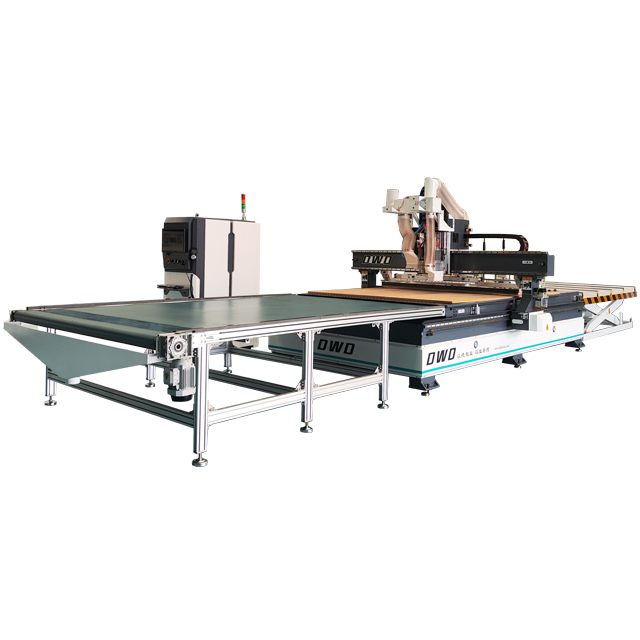
The integration of the CNC Router Machine into cabinet manufacturing has fundamentally shifted the industry from a labor-intensive craft to a high-tech production powerhouse. By automating the cutting, drilling, and milling processes, these machines allow manufacturers to produce complex, high-tolerance components with zero human error, drastically reducing lead times while maximizing material yield and design flexibility.
This transition is not merely about replacing saws with routers; it is about a complete overhaul of the B2B supply chain. From small custom shops to large-scale industrial facilities, the ability to maintain consistent quality at scale is the new benchmark for success. As we explore the impact of this technology, we will examine how digital precision and automated workflows are redefining what is possible in modern furniture and cabinetry production.
Expert Woodworking, at Scale
Versatility: Beyond Simple Cutting
Reduced Cost, Higher Output
Optimizing Your Production Workflow
The implementation of a CNC Router Machine allows manufacturers to replicate the intricate detail of a master woodworker across thousands of units with absolute consistency. While a human craftsman may tire or make slight measurement errors over a long shift, an automated system executes the exact same G-code commands with 100% repeatability. This ensures that every cabinet door, side panel, and shelving unit fits perfectly during final assembly, eliminating the need for manual trimming or adjustments on the factory floor.
Scaling a business in the cabinet industry used to mean hiring more skilled labor, which is increasingly difficult to find in today’s market. With a CNC Router Machine, the "expertise" is embedded in the software and the machine's mechanical capabilities. Once a design is perfected in the CAD/CAM environment, the machine can run 24/7 if necessary, producing complex joinery like dovetails, mortise and tenons, and cam-and-bolt holes with a level of precision that manual tools simply cannot match. This allows a B2B supplier to take on larger contracts without a proportional increase in headcount.
Furthermore, the consistency provided by a CNC Router Machine enhances brand reputation. In the B2B world, contractors and developers demand reliability. If a thousand kitchen units are ordered for a new apartment complex, every single unit must meet the specified tolerances. Using automated CNC Router Machine technology ensures that the first unit off the line is identical to the thousandth, providing a level of quality assurance that becomes a competitive advantage in the global marketplace.
To understand the scale of improvement, consider the technical specifications required for modern "flat-pack" or frameless cabinetry. These designs rely on perfect 90-degree angles and precise hole placements for European-style hinges. A CNC Router Machine utilizes high-torque spindles and vacuum table systems to hold workpieces firmly, ensuring that even thin veneers or delicate laminates are processed without chipping or misalignment.
| Feature | Manual Production | CNC Router Machine Production |
| Tolerance | +/- 1.0mm to 3.0mm | +/- 0.01mm to 0.05mm |
| Joinery Speed | Slow (Manual Layout) | Instant (Software Driven) |
| Error Rate | High (Human Fatigue) | Near Zero (Sensor Monitored) |
| Scalability | Linear (Requires More People) | Exponential (Requires More Shift Time) |
A modern CNC Router Machine serves as a multi-functional workstation capable of performing nested-based manufacturing, 3D carving, and complex boring operations all in a single setup. This versatility means that a cabinet shop no longer needs a separate table saw, drill press, and shaper for different parts of the process. Instead, a single CNC Router Machine can handle the entire fabrication cycle from a raw sheet of plywood or MDF to a finished, ready-to-assemble kit.
The true power of versatility lies in the "Nested-Based Manufacturing" (NBM) approach. By using specialized software, a CNC Router Machine can arrange all the components of a cabinet project onto a single sheet of material to minimize waste. This includes not just the rectangular panels, but also arched toe kicks, decorative carvings, and all necessary hardware holes. The machine automatically switches between different bits—such as compression bits for clean edges and drill bits for shelf pins—using an Automatic Tool Changer (ATC).
This adaptability extends to the materials used in the B2B sector. While wood is the primary medium, a robust CNC Router Machine can also process acrylics, non-ferrous metals like aluminum for trim, and various composite materials used in commercial laboratory or medical cabinetry. This allows a manufacturer to diversify their product line and enter new markets without investing in entirely new machinery, making the CNC Router Machine the most flexible asset on the factory floor.
Modern B2B projects often require a mix of materials to meet safety and aesthetic standards. The ability of the CNC Router Machine to jump from one material density to another by simply adjusting spindle speeds and feed rates is a game changer for industrial production.
Plywood and MDF: The staple of the cabinet industry, processed at high speeds with nested layouts.
Solid Wood: Used for high-end face frames and raised panel doors requiring 3D contouring.
Melamine and Laminates: Requiring specific bit geometries to prevent breakout on the surface.
Composite Panels: For fire-rated or moisture-resistant commercial applications.
Investing in a CNC Router Machine significantly lowers the cost per part by maximizing material utilization and reducing the total man-hours required for fabrication. In a traditional setting, labor accounts for a massive portion of the overhead. By automating the most time-consuming tasks, a CNC Router Machine allows a single operator to produce the volume of work that previously required four or five employees, directly impacting the bottom line and allowing for more competitive B2B pricing.
Material waste is another area where the CNC Router Machine provides a massive financial return. Through advanced nesting algorithms, the machine calculates the most efficient way to cut parts from a sheet, often achieving over 90% material utilization. In a high-volume factory, saving even 5% or 10% of material per day translates into thousands of dollars in savings every month. The CNC Router Machine essentially pays for itself by turning what used to be scrap into usable components.
Moreover, the reduction in secondary operations contributes to higher output. Because a CNC Router Machine can edge-band, drill, and route in one or two stages, the "work in progress" (WIP) time is slashed. Parts move from the CNC Router Machine directly to the assembly or finishing department without needing to stop at multiple manual stations for sanding or corrective drilling. This streamlined flow increases the total throughput of the facility, allowing businesses to meet tighter deadlines and handle more clients simultaneously.
When analyzing the return on investment (ROI) for a CNC Router Machine, it is essential to look at the "hidden" costs of manual labor versus the predictable costs of automation.
Labor Savings: Reduction in skilled labor requirements; the CNC Router Machine handles the complex geometry.
Waste Reduction: Precision nesting minimizes the "kerf" waste and maximizes parts per sheet.
Electricity and Floor Space: One CNC Router Machine replaces several smaller machines, optimizing the factory footprint.
Error Mitigation: Eliminates the cost of "re-dos" caused by human measurement errors or misinterpretation of blueprints.
To fully leverage a CNC Router Machine, a business must integrate its design software directly with the machine’s controller to create a seamless "Screen-to-Machine" workflow. This digital thread begins with the initial customer consultation and design phase. When the design is finalized in a CAD program, the data is converted into machine-ready code, ensuring that exactly what was designed is exactly what the CNC Router Machine produces. This eliminates the risk of communication errors between the office and the shop floor.
The efficiency of a CNC Router Machine is also enhanced by modern vacuum hold-down systems and dust collection. High-flow vacuum pumps ensure that even small parts stay in place during high-speed routing, which is critical for maintaining accuracy. Simultaneously, integrated dust hoods on the CNC Router Machine keep the workspace clean, reducing the wear and tear on mechanical components and ensuring a safer environment for workers. This level of industrial optimization is what separates modern B2B leaders from traditional workshops.
Finally, the maintenance and longevity of a CNC Router Machine are paramount for sustained output. Heavy-duty frames, precision ball screws, and high-quality linear rails ensure that the machine remains accurate over years of heavy use. By implementing a routine maintenance schedule—lubricating rails and checking spindle cooling—manufacturers can ensure their CNC Router Machine remains the heartbeat of their production line for decades, providing a stable foundation for business growth and innovation.
For a B2B buyer, understanding the hardware behind the CNC Router Machine is vital for making an informed purchase. Each component plays a role in the speed and quality of the final cabinet product.
Spindle Power: High-kilowatt spindles allow for faster feed rates in dense hardwoods.
Drive System: Servomotors provide higher precision and speed compared to basic stepper motors.
Control System: User-friendly interfaces allow operators to load programs and adjust settings quickly.
Vacuum Table: Multi-zone tables allow the CNC Router Machine to hold different sheet sizes without manual clamping.
The cabinet industry is no longer defined by the saw and the chisel, but by the precision and efficiency of the CNC Router Machine. By adopting this technology, manufacturers can achieve expert-level woodworking at an industrial scale, offering a level of versatility and cost-efficiency that was previously impossible. The ability of the CNC Router Machine to reduce waste, eliminate human error, and streamline the production workflow makes it an indispensable tool for any B2B organization looking to remain competitive in a digital-first economy. As material costs and labor shortages continue to challenge the market, the CNC Router Machine stands as the ultimate solution for high-output, high-quality manufacturing.