close
Choose Your Site
Global
Social Media

Views: 0 Author: Site Editor Publish Time: 2026-03-15 Origin: Site
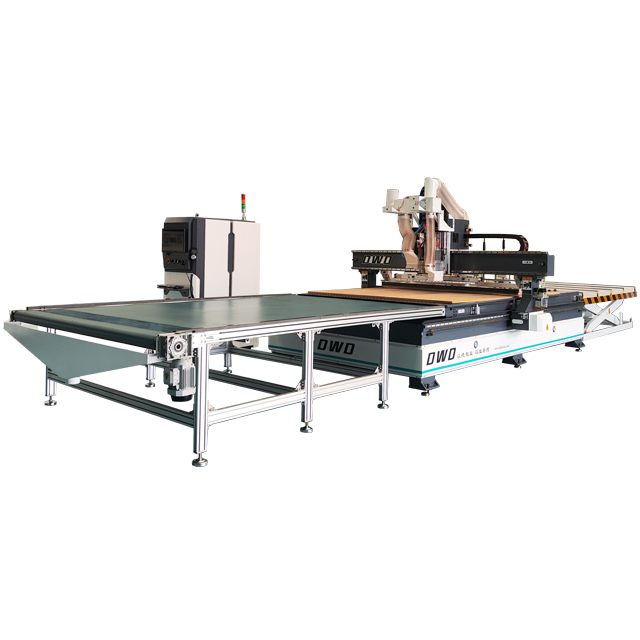
The industrial manufacturing landscape relies heavily on the precision and longevity of the CNC Router Machine to maintain high output levels and consistent product quality. For B2B procurement managers and factory owners, understanding the expected service life of a CNC Router Machine is not just about equipment maintenance; it is a critical component of capital expenditure planning and long-term operational ROI. Whether you are cutting non-ferrous metals, industrial plastics, or composite materials, the durability of your CNC Router Machine determines your competitive edge in a demanding market.
The typical lifespan of a high-quality industrial CNC Router Machine ranges from 10 to 15 years under standard operating conditions, while entry-level or hobbyist CNC Router Machine models may only last 3 to 5 years. With rigorous preventative maintenance and component upgrades, a premium industrial CNC Router Machine can remain productive for 20 years or more.
This comprehensive guide explores the various factors that influence the longevity of your CNC Router Machine. We will analyze the specific mechanical components that bear the most stress, the impact of different industrial applications on wear and tear, and the strategic maintenance protocols required to maximize your investment. By understanding these variables, businesses can better predict when a CNC Router Machine requires a simple repair, a total rebuild, or a complete replacement to avoid costly downtime.
Typical Lifespan Ranges By CNC Router Class
The Biggest Drivers Of CNC Router Lifespan
Components That Define CNC Routers’ Lifespan
Maintenance Practices That Most Affect Lifespan
Operator Habits That Extend (Or Shorten) Lifespan
Signs Your CNC Router Is Nearing The End Of Its Useful Life
Repair VS. Rebuild VS. Replace
Safety And Compliance Considerations Over The Lifespan
How Lifespan Changes With Application
Summary
The lifespan of a CNC Router Machine is primarily categorized by its build quality and intended duty cycle, with hobbyist machines lasting 3-5 years, mid-range professional units lasting 7-10 years, and heavy-duty industrial CNC Router Machine systems lasting 15+ years.
The classification of a CNC Router Machine dictates the materials used in its frame, the quality of its motion control components, and its ability to withstand continuous vibration. A hobbyist CNC Router Machine often utilizes aluminum extrusions or lighter steel frames which lack the mass to dampen vibrations effectively. Over time, these vibrations cause micro-fractures and misalignment, leading to a shorter operational window. In contrast, an industrial CNC Router Machine is typically built with a stress-relieved, heavy steel gantry and bed, designed specifically for three-shift operations where the machine rarely stops.
When evaluating a CNC Router Machine for purchase, it is vital to match the machine class with your projected output. Using a professional-grade CNC Router Machine for light tasks will exponentially increase its lifespan, whereas pushing a mid-range CNC Router Machine to perform heavy industrial cutting will lead to premature failure. The following table compares the expected lifespan and duty cycles across different classes:
| CNC Router Machine Class | Expected Lifespan | Typical Duty Cycle | Frame Construction |
| Hobbyist/Desktop | 3 - 5 Years | 5-10 hours/week | Aluminum / Bolted Steel |
| Professional / Shop | 7 - 12 Years | 20-40 hours/week | Welded Steel |
| Industrial / Production | 15 - 20+ Years | 80-120+ hours/week | Cast Iron / Heavy Steel |
Investing in an industrial CNC Router Machine offers a lower "cost per hour" over its lifetime despite a higher initial price point. The structural integrity of the CNC Router Machine ensures that the geometry remains true even after a decade of high-speed traversing.
The most significant drivers of CNC Router Machine lifespan include the rigidity of the machine frame, the quality of the drive system, environmental factors like dust and temperature, and the intensity of the materials being processed.
Structural rigidity is the foundation of any CNC Router Machine. A frame that flexes under load puts immense pressure on the bearings, rails, and motors. This constant stress leads to localized overheating and mechanical fatigue. A high-quality CNC Router Machine utilizes heavy-duty components that are oversized for their intended load, ensuring that the CNC Router Machine operates well within its safety margins. Environmental control also plays a silent but deadly role; excessive heat can degrade the electronic components of the CNC Router Machine, while fine dust can act as an abrasive on moving parts.
Material hardness is another critical driver for the CNC Router Machine. Consistently cutting dense materials like aluminum or thick phenolic sheets requires more torque and creates more vibration than cutting softwoods. If a CNC Router Machine is not rated for the specific lateral forces generated by these materials, the spindle bearings and lead screws will wear out prematurely. Therefore, the application-specific load is a major determinant of how many cycles a CNC Router Machine can complete before requiring a major overhaul.
Mechanical Load: The force required to move the tool through the material.
Duty Cycle: How many hours the CNC Router Machine runs per day.
Environmental Quality: Presence of dust collection and climate control.
Component Specification: Whether the motors and drives are industrial-grade or consumer-grade.
The components that most accurately define the lifespan of a CNC Router Machine are the spindle motor, the linear motion system (rails and bearings), the drive mechanism (ballscrews or rack and pinion), and the CNC controller electronics.
The spindle is the heart of the CNC Router Machine and is often the first major component to require replacement. High-speed spindles rely on precision bearings that have a finite number of rotation hours. An industrial CNC Router Machine usually features a liquid-cooled or high-end air-cooled spindle designed for thousands of hours of operation. If the spindle of the CNC Router Machine is frequently pushed to its maximum RPM or subjected to improper "warm-up" sequences, its lifespan will be severely truncated.
Linear guides and drive systems are the "muscles" of the CNC Router Machine. In a high-end CNC Router Machine, hardened steel rails and high-precision ballscrews are used to ensure smooth movement. If these parts are exposed to debris, the friction increases, leading to "backlash" or play in the machine's movement. Once the drive system of a CNC Router Machine loses its precision, the entire unit's utility decreases until those parts are replaced. Lastly, the electrical components—inverters, drivers, and the main CPU—are sensitive to power surges and heat, making them critical yet vulnerable parts of the CNC Router Machine ecosystem.
Spindle: 5,000 to 10,000 hours (depending on bearing type).
Linear Rails: 10+ years if lubricated correctly.
Ballscrews: 5 - 8 years in high-production environments.
Controller: 10 - 15 years, though software may become obsolete sooner.
The maintenance practices that have the greatest impact on the CNC Router Machine lifespan are consistent lubrication of moving parts, regular cleaning of the cooling systems, and periodic calibration of the gantry alignment.
Lubrication is the single most important maintenance task for a CNC Router Machine. Without a thin film of oil or grease, the friction between the bearings and the rails on the CNC Router Machine will generate heat, leading to galling and permanent metal damage. Many modern industrial CNC Router Machine models include automatic lubrication systems to mitigate human error, but manual checks are still required to ensure the lines are not clogged. A well-lubricated CNC Router Machine moves with less resistance, which in turn reduces the electrical load on the stepper or servo motors.
Cleaning the dust collection and cooling systems is equally vital for the CNC Router Machine. Dust that accumulates on the electronics or inside the spindle motor acts as insulation, preventing heat from escaping. For a CNC Router Machine, heat is the primary enemy of electrical longevity. Furthermore, ensuring the air filters on the control cabinet of the CNC Router Machine are clean prevents the internal components from overheating and failing during long production runs. Regular "squareness" checks also ensure the CNC Router Machine isn't fighting itself, which prevents unnecessary torque on the drive motors.
Daily: Clean the bed, check the spindle cooling fluid, and wipe down rails.
Weekly: Check for loose bolts, inspect dust hoses, and apply manual grease if needed.
Monthly: Inspect electrical connections, clean cabinet filters, and check for backlash.
Annually: Perform a full machine recalibration and inspect the integrity of the vacuum table gaskets.
Operator habits such as using correct feed and speed rates, performing spindle warm-ups, and practicing proper tool seating can significantly extend the lifespan of a CNC Router Machine.
A knowledgeable operator is the best defense against CNC Router Machine failure. Running a CNC Router Machine at incorrect "speeds and feeds" causes excessive heat and vibration. If the feed rate is too slow, the tool rubs instead of cutting, heating up the spindle. If it is too fast, it puts excessive lateral pressure on the gantry of the CNC Router Machine. By optimizing these parameters, the operator ensures the CNC Router Machine operates in its "sweet spot," where mechanical stress is minimized and material removal is maximized.
Another critical habit is the spindle warm-up procedure. A high-speed CNC Router Machine spindle needs to reach a certain internal temperature to allow the lubricants to flow and the metal components to expand evenly. Skipping this step on a CNC Router Machine can cause the cold bearings to seize or wear unevenly. Additionally, how an operator handles tool changes—ensuring collets are clean and balanced—prevents runout, which is a major cause of spindle vibration and premature failure in any CNC Router Machine.
Aggressive Plunging: Forcing the tool into material too quickly.
Neglecting Collet Cleaning: Allowing dust to sit inside the tool holder.
Overriding Safety Limits: Forcing the CNC Router Machine beyond its travel limits.
Ignoring Unusual Noises: Continuing to run a CNC Router Machine when it sounds different.
Clear signs that a CNC Router Machine is reaching the end of its useful life include persistent loss of accuracy, frequent electrical failures, excessive mechanical noise, and the inability to find replacement parts for aging controllers.
Loss of precision is the most common indicator that a CNC Router Machine is failing. If you notice that circles are becoming slightly oval or that parts no longer fit together despite perfect programming, the mechanical drive system of your CNC Router Machine is likely worn out. This "backlash" is often caused by the degradation of the ballscrew nuts or the rack and pinion teeth. While some components of the CNC Router Machine can be replaced, once the frame itself begins to warp or the main bed loses its flatness, the CNC Router Machine is no longer viable for high-precision work.
Electrical "gremlins" are another warning sign. If the CNC Router Machine starts throwing random error codes or the controller frequently freezes, it suggests that the internal circuitry or the wiring harnesses are degrading. In many older CNC Router Machine models, the proprietary electronics become obsolete, meaning a single blown board could render the entire CNC Router Machine useless. If the cost of maintaining the CNC Router Machine begins to exceed 50% of its original value annually, it is a strong signal that the end of its service life is near.
Inconsistent Dimensions: Parts vary in size across the cutting bed.
Loud Grinding Noises: Indication of bearing or gear failure.
Burn Marks on Material: Result of spindle RPM instability or tool runout.
Frequent Software Crashes: Aging computer hardware or failing memory.
Deciding whether to repair, rebuild, or replace a CNC Router Machine depends on the cost of the intervention relative to the productivity gains, with repairs suited for minor component failures and replacement necessary when the frame or technology is obsolete.
A "Repair" is generally the best route for a CNC Router Machine when a specific, modular part fails—such as a limit switch, a cooling pump, or a single drive motor. These are low-cost interventions that keep the CNC Router Machine in service with minimal downtime. For a high-quality industrial CNC Router Machine, replacing a spindle every 5 years is considered a standard repair, not a sign that the machine is dead.
A "Rebuild" involves stripping the CNC Router Machine down to its frame and replacing all moving parts, including rails, bearings, and motors. This is a viable option for a heavy-duty CNC Router Machine with a solid cast iron or heavy steel frame that is otherwise in excellent condition. However, a "Replace" becomes the logical choice when the underlying technology of the CNC Router Machine is so outdated that it cannot compete with modern cutting speeds or if the structural integrity of the CNC Router Machine is compromised.
| Option | Best For | Typical Cost | Outcome |
| Repair | Single component failure | 5% - 10% of New | Extends life by 1-2 years |
| Rebuild | Solid frame, worn parts | 30% - 50% of New | Extends life by 5-10 years |
| Replace | Obsolete tech / Warped frame | 100% of New | New warranty and modern speed |
Safety and compliance for a CNC Router Machine must be reassessed throughout its lifespan, as worn-out safety sensors, degraded electrical insulation, and outdated guarding can pose significant risks to operators.
As a CNC Router Machine ages, the safety features that were once cutting-edge may become unreliable. Emergency stop buttons can become sticky, and the light curtains or interlocking doors on a CNC Router Machine might fail due to vibration or dust accumulation. For a B2B operation, maintaining compliance with OSHA or ISO standards is mandatory. A CNC Router Machine that lacks modern safety redundancies may eventually become a liability, regardless of how well it still cuts.
Furthermore, electrical safety is a major concern for an older CNC Router Machine. The constant movement of the cable carriers (drag chains) causes the wiring to flex millions of times. Over a decade, the insulation on these wires can crack, leading to short circuits or even fire hazards within the CNC Router Machine. Regular thermal imaging of the electrical cabinet and testing the grounding of the CNC Router Machine are essential practices to ensure that the machine remains safe for the duration of its operational life.
Cable Integrity: Inspecting wires inside the drag chains for cracks.
Emergency Stops: Testing the response time of the E-stop system.
Dust Containment: Ensuring the vacuum and filtration systems meet current health standards.
Guard Inspection: Checking that all physical shields on the CNC Router Machine are secure.
The application for which a CNC Router Machine is used determines its wear rate, with high-speed woodworking causing high dust accumulation and non-ferrous metal cutting causing significant mechanical stress and heat.
If your CNC Router Machine is primarily used for cutting soft foams or light woods, the mechanical load is minimal. In these applications, the lifespan of the CNC Router Machine is mostly limited by the electronic components and the accumulation of fine dust. However, if the CNC Router Machine is used for heavy nested-based manufacturing or cutting aluminum plate, the constant lateral force and high torque requirements will wear out the bearings and drive systems much faster. In metalworking, the use of coolants can also affect the lifespan of a CNC Router Machine if the fluids are corrosive to the seals or the bed.
Furthermore, the "cleanliness" of the application matters. A CNC Router Machine working in a cleanroom-style plastic fabrication shop will naturally outlast a CNC Router Machine working in a dusty MDF workshop where the abrasive particles constantly infiltrate the lubrication. Choosing a CNC Router Machine with the appropriate "sealing" for your specific environment—such as bellows on the rails or pressurized spindles—is essential for maximizing the lifespan based on your specific industrial application.
Woodworking: High dust levels; requires excellent extraction for CNC Router Machine longevity.
Sign Making: High detail/vibration; wears out small-diameter spindle bearings.
Metal Fabrication: High torque/heat; puts stress on the CNC Router Machine drive motors.
Plastics: Static electricity; can interfere with the CNC Router Machine controller if not grounded.
In conclusion, the longevity of a CNC Router Machine is not a fixed number but a variable determined by the synergy of build quality, maintenance diligence, and operator expertise. For a professional operation, investing in an industrial-grade CNC Router Machine ensures a robust foundation that can support 15 to 20 years of production with the right care. By focusing on the critical components—the spindle, the linear rails, and the drive system—and implementing a strict preventative maintenance schedule, you can significantly delay the "end-of-life" phase of your equipment.
Ultimately, maximizing the lifespan of your CNC Router Machine requires a proactive approach. Monitor the signs of wear, such as loss of precision or increased noise, and do not hesitate to perform modular repairs before they escalate into catastrophic failures. Whether you are cutting wood, plastic, or metal, treating your CNC Router Machine as a precision instrument rather than just a piece of heavy machinery is the secret to achieving the highest possible ROI. Keep your CNC Router Machine clean, lubricated, and calibrated, and it will remain the cornerstone of your manufacturing capabilities for decades to come.